Key Concepts: Sir Albert Howard
1. Who was Sir Albert Howard? He was a British botanist and agricultural researcher (1873–1947), widely regarded as the “father of modern organic agriculture.” His work in India and the UK laid the scientific foundation for the organic farming movement.
2. What is the Indore Method? This is the specific composting system Howard developed while working in Indore, India. It revolutionized agriculture by demonstrating how to systematically recycle agricultural waste—mixing animal manure and plant residues—to create high-quality humus.
3. What is the “Law of Return”? This is Howard’s central philosophy: the idea that everything taken from the soil must be returned to it. He argued that farming is a cycle, not an extraction industry, and that returning organic matter to the earth is essential for permanent soil fertility.
4. What is the connection between soil and health? Howard famously posited that “the health of soil, plant, animal and man is one and indivisible.” He believed that human disease stems largely from malnutrition caused by crops grown in degraded, chemically treated soils.
5. Why did he oppose artificial fertilizers? He was a vocal critic of the “NPK mentality”—the reliance on nitrogen, phosphorus, and potassium chemicals. He argued that these artificial manures destroy soil life (mycorrhizal fungi) and bypass the natural biological processes necessary for growing truly nutritious food.
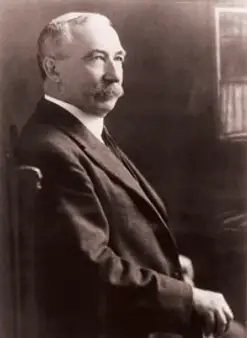
Sir Albert Howard: The Prophet of the Soil
“The health of soil, plant, animal and man is one and indivisible.”
The visionary British botanist Sir Albert Howard (1873–1947) is widely recognized as the father of the modern organic agriculture movement.
At a time when the world was rushing toward industrial chemistry and artificial fertilizers, Howard took a different path. He looked down—at the soil beneath his feet—and found a universe of biological complexity that he believed was the foundation of all civilization. His work warned us that to cheat the soil of its organic rights was to condemn humanity to a future of malnutrition and disease. Today, as we face global crises in topsoil loss and food sovereignty, his voice is not just a distant echo; it is a clarion call.
The Great Re-Education
Albert Howard was a product of the best Western scientific education, a Cambridge scholar trained in the laboratory. But his true education began in 1905, when he arrived in India as the Imperial Economic Botanist.
In the fields of Pusa and Indore, he encountered farmers who had cultivated the same land for centuries without depleting it. He realized that these “peasants” were his true professors. He observed that while his scientifically bred crops in the research station succumbed to disease, the crops in the neighboring fields—nourished by traditional organic methods—remained healthy. This observation led to his radical conclusion: pests are not enemies to be destroyed with poisons, but nature’s “censors,” sent to warn us of poor soil management.
The Indore Method and the Law of Return
Howard’s most practical legacy is the Indore Method of composting, a system he developed to mimic the forest floor’s natural decay. By systematically mixing animal wastes, plant residues, and earth, he proved that farmers could manufacture high-quality humus on a massive scale.
This method was built on his “Law of Return”—the principle that everything taken from the soil must be returned to it. He argued that agriculture is a cycle, not a factory. Breaking this cycle with “artificial manures” (NPK fertilizers) might boost yields temporarily, but it would ultimately destroy the soil’s biological life, the mycorrhizal fungi, and the nutritional quality of the food.
Explore the Life and Work of Albert Howard
We have assembled a collection of resources to help you understand the man and his message.
- Timeline of a Pioneer Follow Howard’s journey from his childhood in Shropshire to his knighthood and his final years as a global campaigner.
- The Picture Gallery View rare photographs of Howard, his scientific partner and wife Gabrielle Matthaei, and the original diagrams of the Indore composting system.
- His Major Works Howard was a prolific writer. We have digitized his two most important books for you to read in full:
- An Agricultural Testament (1940) – The book that launched the organic movement.
- The Soil and Health (1947) – His final manifesto connecting agriculture to preventative medicine.
- Multimedia & Archives Dive deeper with our curated collections of Articles, Podcasts, and Videos that discuss his legacy. You can also read specific Book Extracts for quick insights into his thinking.
Sir Albert Howard taught us that the soil is not dead matter, but a living ecosystem. We invite you to explore these pages and discover why, almost a century later, his work is more relevant than ever.