Antoine Bechamp | The Forgotten Pioneer of Cellular Biology
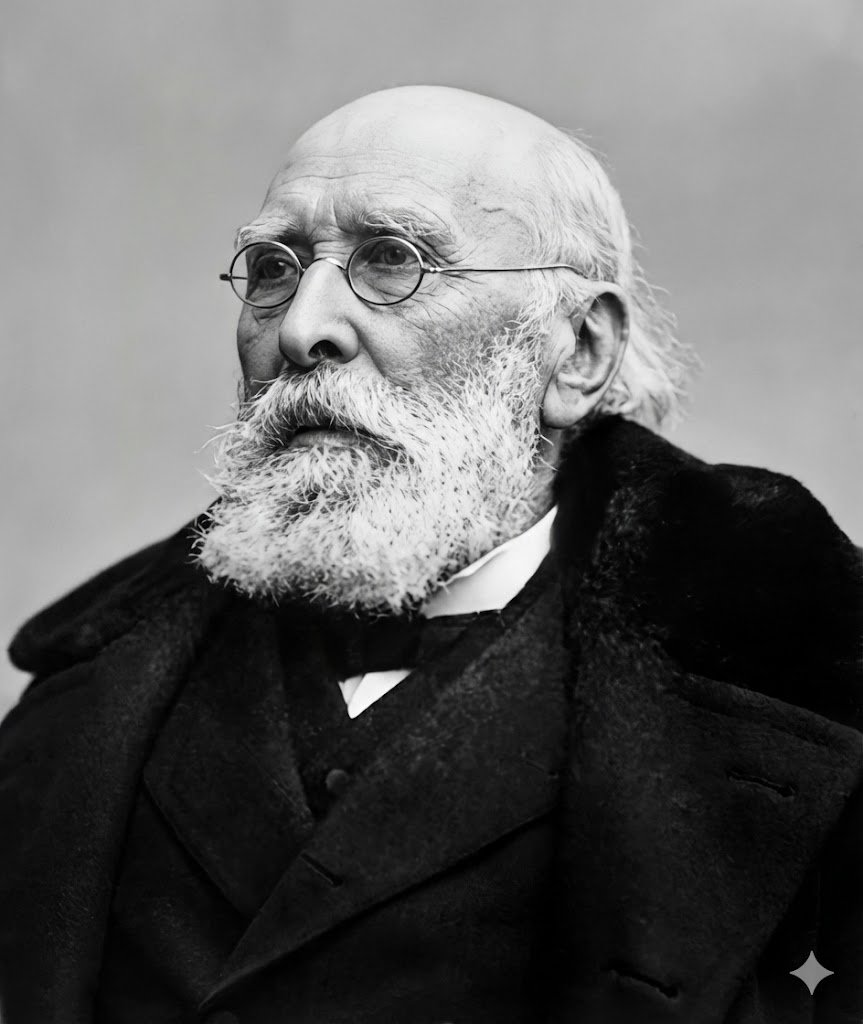
Antoine Béchamp: The Forgotten Pioneer of Cellular Biology
Antoine Béchamp (1816–1908) was a brilliant 19th-century French scientist, professor, and member of the French Academy of Sciences. A contemporary and bitter rival of Louis Pasteur, Béchamp’s groundbreaking work offered a radically different view of biology and disease that challenged the “Germ Theory” which dominates modern medicine.
Key Concepts
The Microzyma Theory: Béchamp discovered tiny, indestructible living entities he called “microzymas” (or “little ferments”) which he identified as the fundamental building blocks of all life. He proposed that these entities build cells and, upon death, break them down to be recycled by nature.
The “Terrain” Theory: While Pasteur focused on the germ as the enemy, Béchamp argued that the “terrain” (the internal environment of the body) determines health. He believed that disease arises when the body’s balance is disturbed, causing endogenous microzymas to transform into bacteria to clean up the toxic environment.
Pleomorphism: The concept that microorganisms can change form (morph) through different life cycles based on their environment, a direct contradiction to the fixed “monomorphic” view of bacteria held by Pasteur.
Legacy: Despite his profound contributions, Béchamp’s work was politically sidelined in favor of Pasteur’s more commercially viable theories. Today, his research is being rediscovered by scientists and researchers exploring the complexities of the microbiome and epigenetics.
